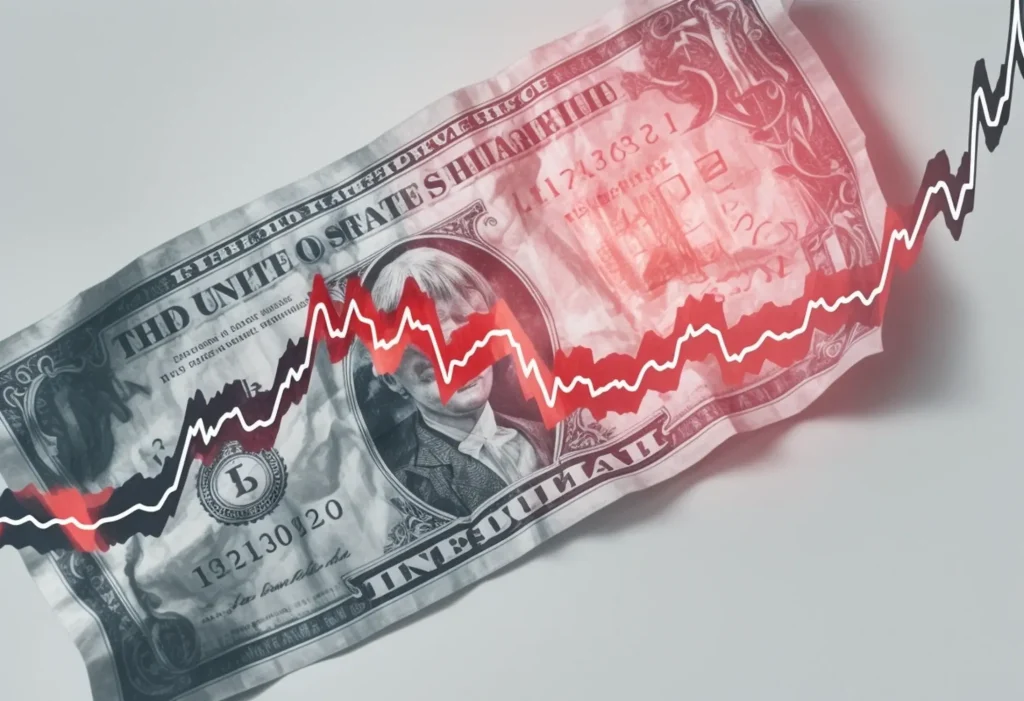
The overvaluation of the U.S. dollar poses significant risks to the global economy, creating volatility in financial markets and affecting international trade dynamics. As this situation evolves, it’s crucial for investors and policymakers to understand its implications and prepare for potential shifts.
Understanding the Overvaluation of U.S. Dollar
An overvalued currency presents a unique dilemma in the financial world. The U.S. dollar, long considered the world’s primary reserve currency, is increasingly viewed through this lens. An overvalued dollar means it is stronger than its economic fundamentals warrant, leading to imbalances in trade. Factors such as interest rates, inflation, and market perceptions heavily influence the dollar’s valuation. For example, recent reports suggest that the U.S. dollar is overvalued by approximately 25% compared to its historical averages, based on inflation-adjusted calculations that assess purchasing power parity (TheStreet).
Market perception also plays a critical role. Investors’ confidence in the dollar can cause fluctuations that don’t necessarily align with economic realities. This scenario could create a questioning of dollar dominance, as stakeholders from emerging markets to global financial institutions reassess their positions in anticipation of potential corrections.
Global Economic Consequences Ahead
The ramifications of a persistently overvalued U.S. dollar extend far beyond borders. As the dollar strengthens, U.S. exports become more expensive, adversely impacting international trade relationships. Countries dependent on exports to the U.S. could face economic challenges. Emerging economies, which often rely heavily on exports priced in dollars, could see their growth stunted.
For instance, recent instances of rallies in commodities like gold suggest a shift as investors hedge against a declining dollar (BeInCrypto). If these trends continue, we could witness fluctuating market dynamics that may lead to a reconfiguration of trade relationships, particularly with nations like China adjusting their strategies towards free trade in response to U.S. tariffs.
The Federal Reserve’s Role and Policies
The Federal Reserve is a pivotal player in determining the U.S. dollar’s trajectory. Current policies regarding interest rates reflect an ongoing battle against inflation. With inflation still soaring, as indicated by the remark, “The inflation genie in the United States has not been shoved back in the bottle,” experts warn that the Fed may feel pressure to maintain steady rates for the foreseeable future (BeInCrypto).
The implications of such policies could be significant, affecting both domestic and international dollar valuation. Economists, including prominent figures like Steve Hanke, argue that the Fed’s decisions on rates could gradually erode confidence in the dollar. This sentiment is likely to fuel volatility, making it crucial for investors to monitor Fed strategies carefully.
Tariffs and Trade Dynamics
U.S. tariffs introduce further complexity to global trade and the valuation of the dollar. By imposing tariffs, the U.S. government aims to protect domestic industries, but these measures also influence perceptions of U.S. economic power globally. Countries adversely affected by these tariffs often reassess their reliance on dollar-denominated trade.
As the landscape changes, nations such as China are leading the charge towards free trade, diverging from U.S. protectionist measures. This pivot not only challenges the dominance of the dollar but could also create a fragmented trading environment. For markets globally, this poses a critical question: How will nations adapt to these shifting dynamics?
The Evolving Landscape of Currency and Crypto
The rise of cryptocurrencies symbolizes a growing challenge to traditional fiat currencies, including the U.S. dollar. As concerns about dollar stability rise, many investors and market participants may turn to digital currencies as alternatives. Cryptocurrencies could change the landscape entirely, potentially altering how transactions are conducted globally.
Digital currencies also offer a way for economies to circumvent dollar reliance, especially those facing the brunt of U.S. tariffs. The potential for a multi-currency system could reshape international relations and redefine economic resilience in the face of volatility.
Preparing for a New Economic Reality
Investors staring down the barrel of a potential dollar correction must adopt proactive strategies. Actionable steps include reassessing portfolios, diversifying investments, and seeking assets that might act as hedges against dollar depreciation. Risk management becomes paramount during economic transitions, where traditional assets could face increased volatility.
Establishing a clearer strategy, identifying emerging market opportunities, and adjusting expectations based on analyst insights could empower investors to navigate these shifting sands successfully.
Future Insights into the Dollar’s Viability
Looking ahead, the future of the U.S. dollar hangs in a delicate balance. Continuous inflation pressures and evolving economic dynamics threaten its sustainability. Expert perspectives suggest a stark outlook if current trends persist, underlining the potential for decreased dollar viability (BeInCrypto).
As global markets remain influenced by dollar stability, scenarios could unfold where alternative currencies gain traction. Investors and policymakers must stay vigilant to adapt successfully in a rapidly shifting economic landscape.

More Stories
Why Quantum Computing Could Disrupt Crypto Security Forever
Why Prediction Markets Are Set to Transform the Crypto Economy
Why Bitcoin Is About to Change Everything in the U.S. Economy